


A Meaningful Match
What makes a meaningful First Nations collaboration? Give it some time.
WORDS BY Nick Harvey-Doyle | PUBLISHED 10 September 2024

↑ Phoebe Hyles, Designer at Helen Kaminsksi and Janet Marawarr, Bábbarra Women’s Centre. Photography James Giles.
First Nations collaborations are both exciting and complex. On one hand, the opportunity for First Nations artists to share their ancestral stories provides a pathway to greater cultural understanding and economic empowerment. On the other, the history of exploitation in the Indigenous arts sector is deeply fraught, which is why brands must tread respectfully when collaborating with First Nations artists.
In dealing with First Nations artists, best practice guidelines often call for collaborations to be respectful, meaningful, transparent, and fair. But underlying all these principles is one very simple notion: time. “Collaborators need to take the time to build the relationship with the artist, and in doing so they can learn where they’re from, what’s important to them, and the connection between their culture and creative expression,” says Stephanie Parkin, a Quandamooka woman and Chair of the Indigenous Art Code. “If collaborators have an open heart and an open mind toward working with First Nations artists, they’ll find these things out and the outcomes for all parties are often greater.” But what can this look like?
I had a yarn with several people involved in some recent exciting and innovative First Nations collaborations. With a focus on process, we explored how time was critical in building respectful and transparent relationships that created a fertile ground for authentic creative expression and mutual respect.
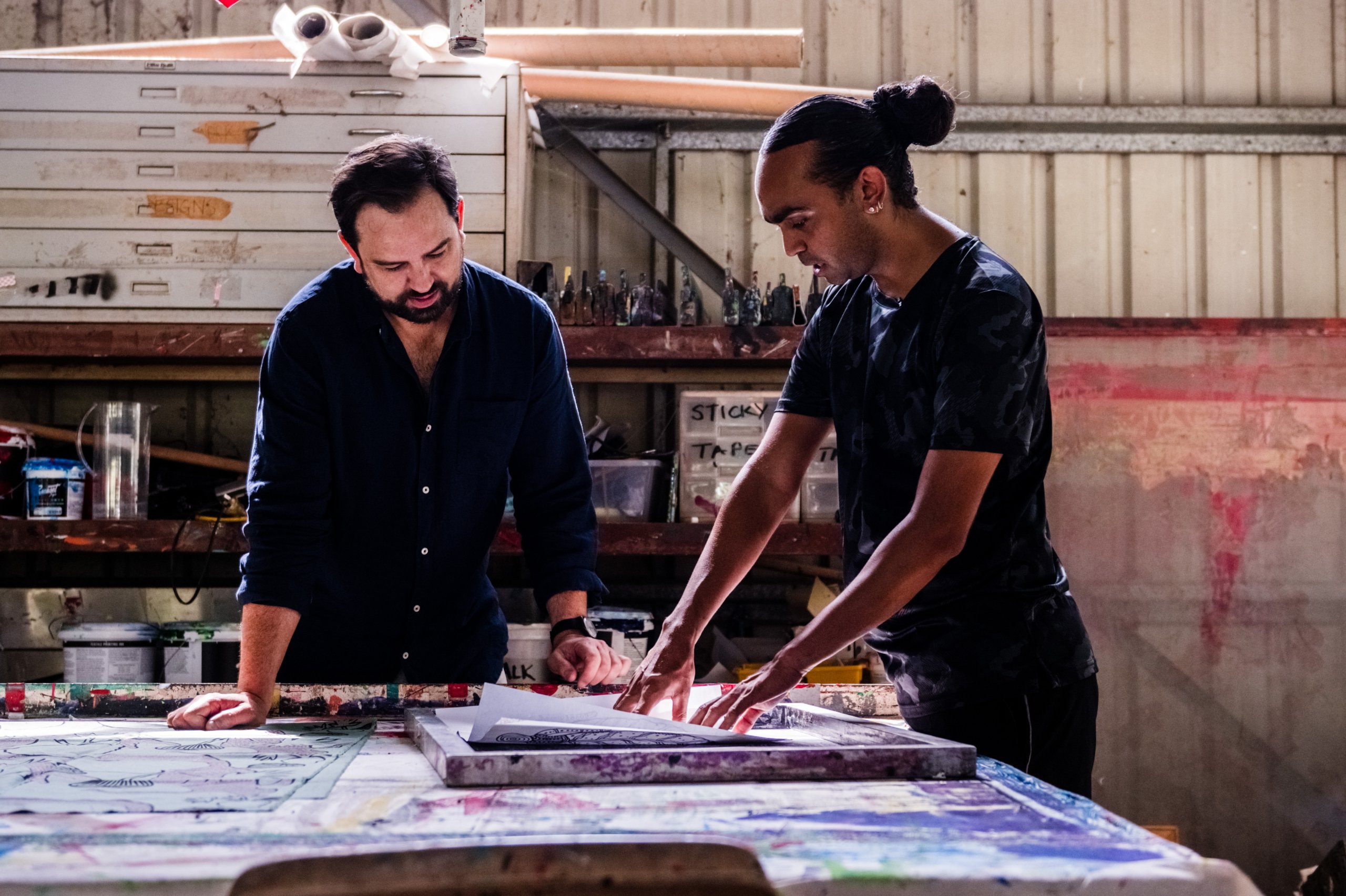
↑ Ty Symonds, Country Road and Kieren Karritpul. Photography PATCH CLAPP.
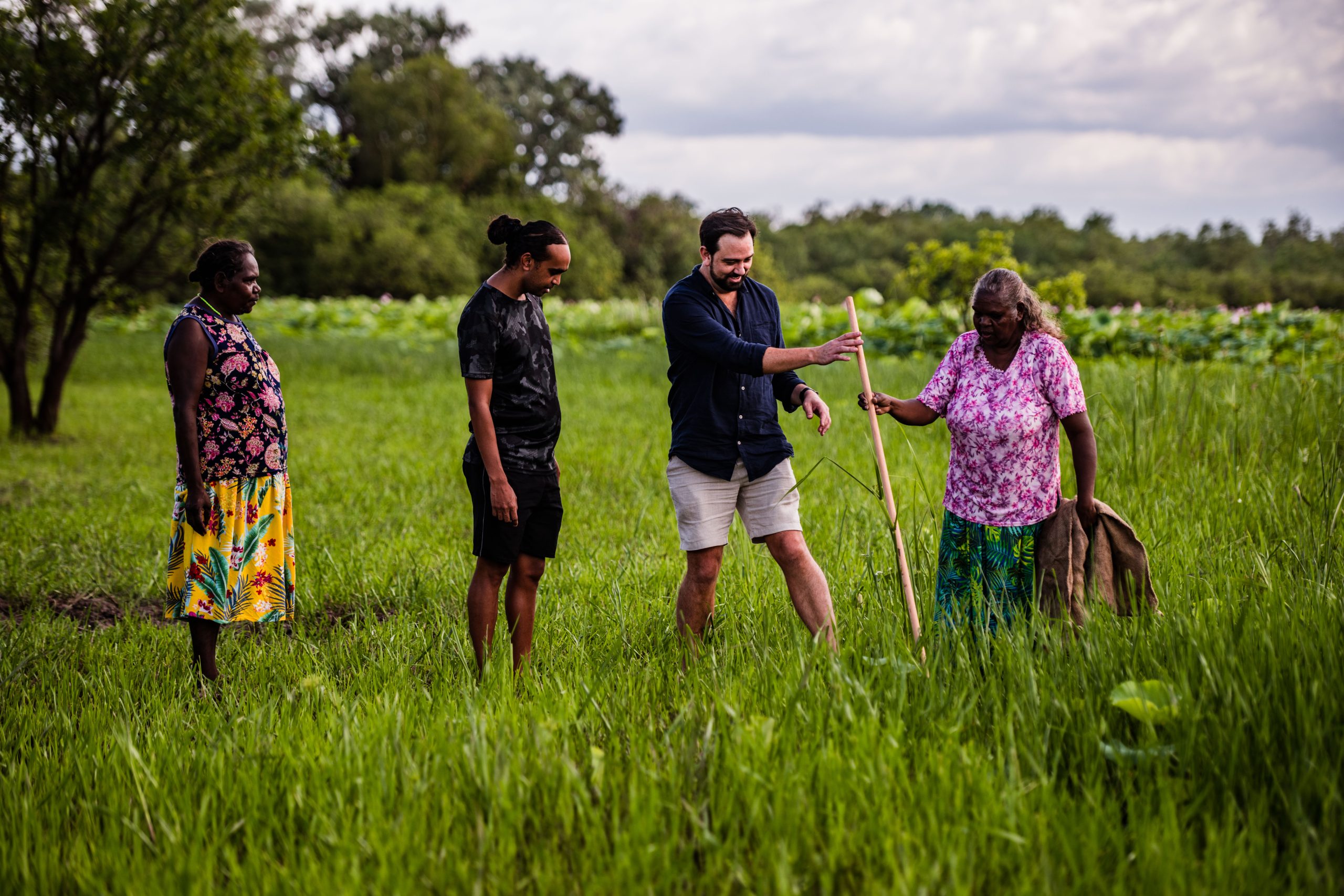
↑ Kieren Karritpul and Ty Symonds, Country Road on a billabong at Nauiyu, Daly River. Photography PATCH CLAPP.
↑ Kieren Karritpul. Photography PATCH CLAPP.
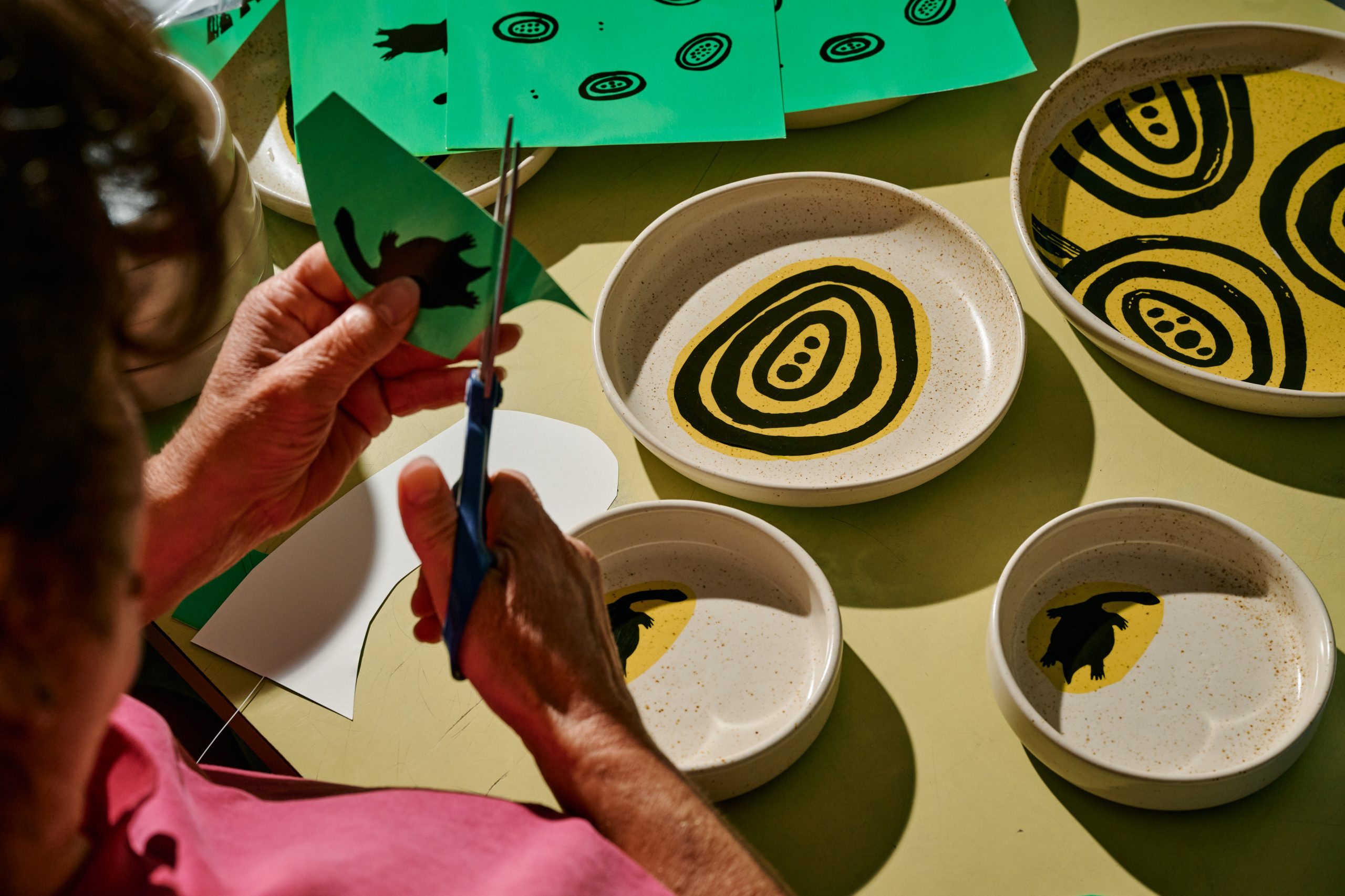
↑ Country Road x Kieren Karritpul. Photography Pete Dillon.
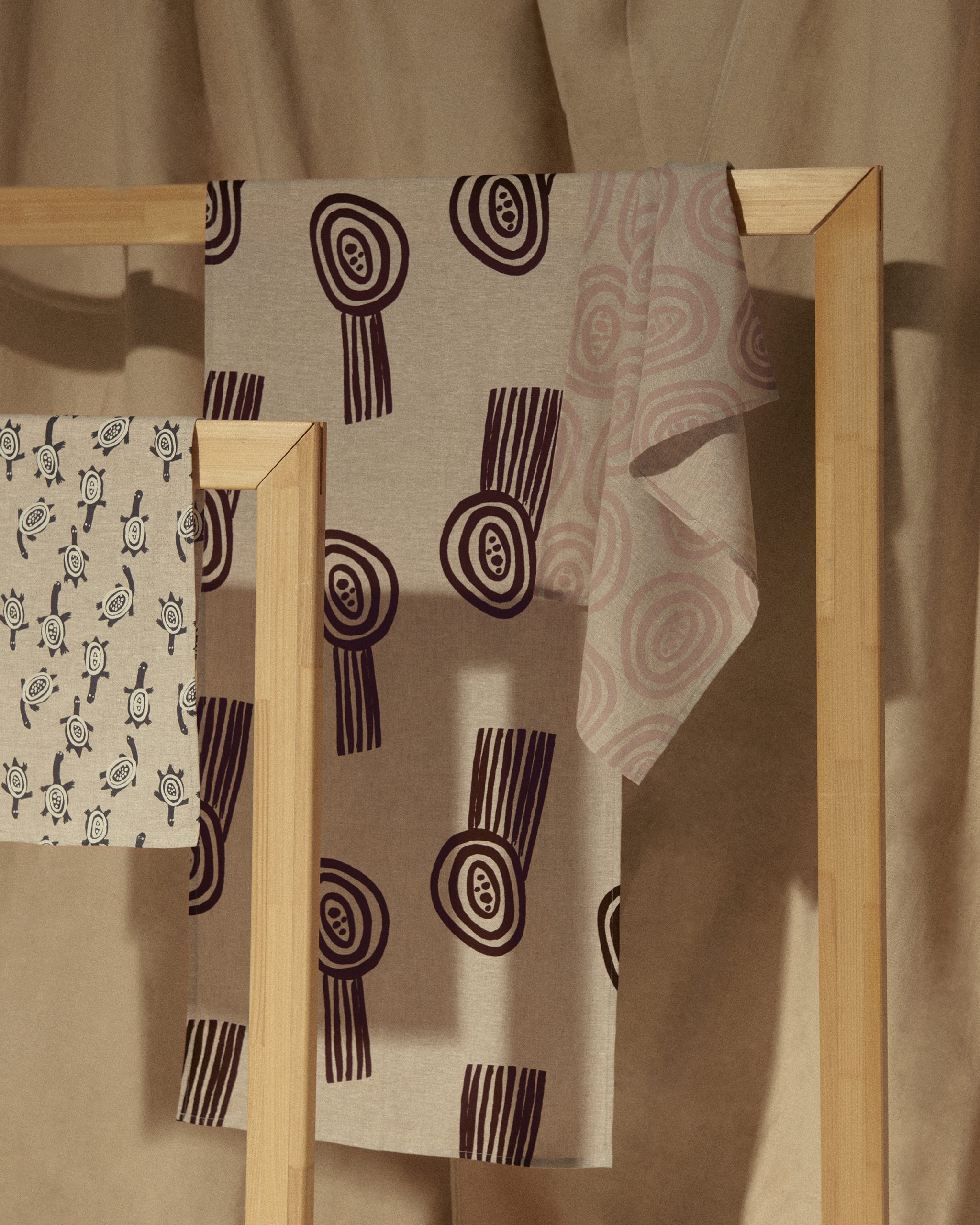
↑ Country Road x Kieren Karritpul, Textiles. Photography Lauren Bamford.
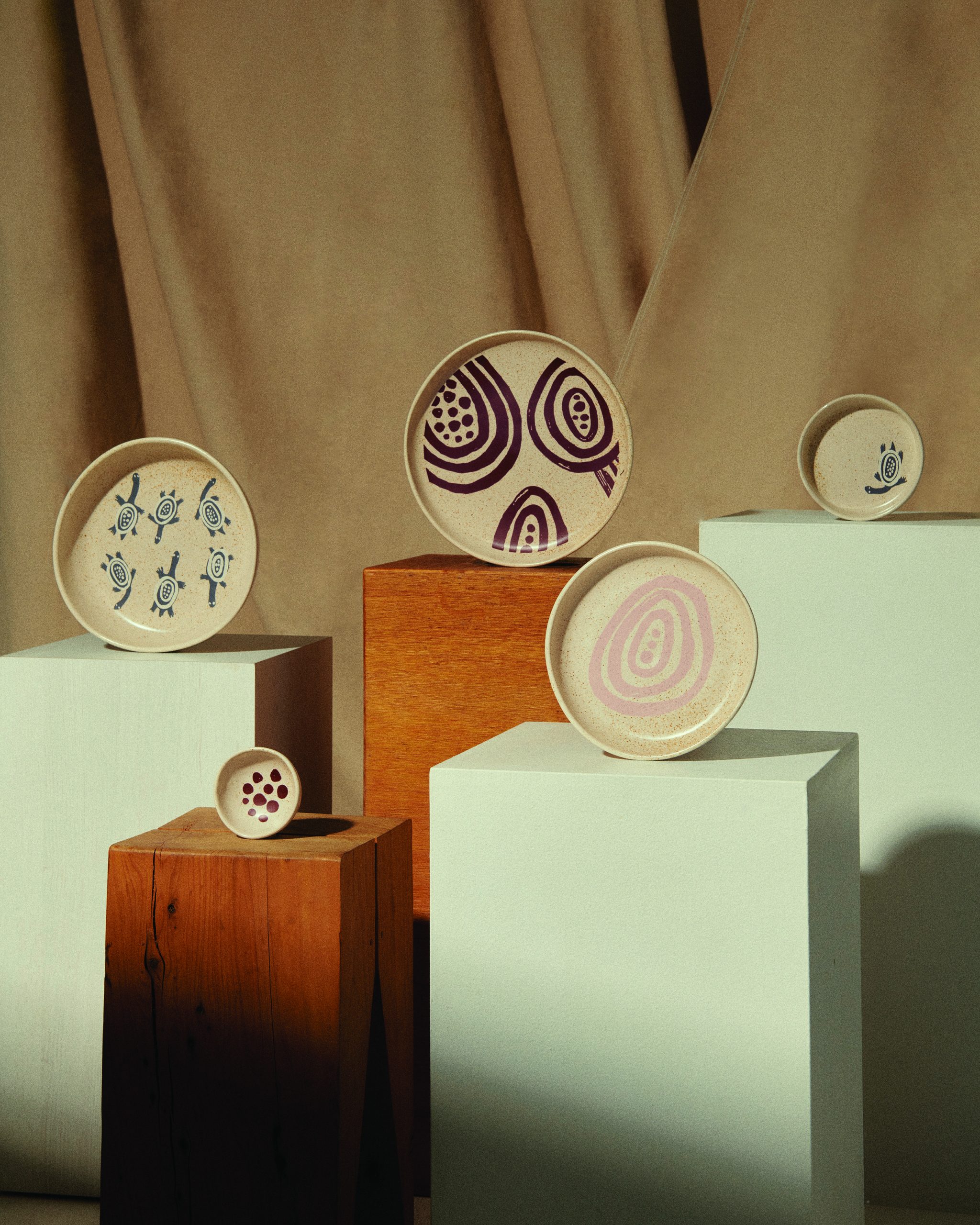
↑ Country Road x Kieren Karritpul, Textiles. Photography Lauren Bamford.
Country Road x Kieren Karritpul, Merrepen Arts
In 2023, Country Road launched a co-designed homewares range with Ngen’giwumirri artist Kieren Karriptul. The limited eight-piece dining range, including five ceramic bowls and three linen textiles, interpreted leitmotifs from Karriptul’s work about the billabongs, mermaids, and turtles that are culturally significant to his community on the Daly River in the Northern Territory. The collaboration, which hit Country Road’s shelves after years of relationship building, has been widely lauded for its artist-led approach.
Country Road was first introduced to Karriptul in 2020, after he was awarded the prestigious National Indigenous Fashion Award for Textile Design. “We knew that we wanted to collaborate with a First Nations artist, and we ultimately chose Kieren based on merit because his win was so exciting,” says Ty Symonds, Country Road’s head of design for home. The brand subsequently met with Karriptul over three years, exchanging ideas through Zoom calls and mutual visits to Daly River and Melbourne, fostering a deep sense of respect and cultural curiosity. Through listening, learning, and understanding Karriptul’s culture, Country Road was also able to introduce themselves to the artist. Karriptul had never heard of the brand until they approached him.
Through taking the time to understand Karriptul’s culture and art practice is how the team landed on a dining range. They wanted to create something with a subliminal message about community and giving life that linked back to the billabongs, turtles, and mermaids.
This collaboration was deeply considered, from inception through delivery, and was crafted entirely in Australia in partnership with local Victoria artisans Bendigo Pottery and Printink Studio. Karriptul was involved at each stage of the design process, which also allowed him the time and opportunity to collaborate with other artisans. To this end, the life and impact of the collaboration lives beyond its limited-edition run, and is evident in the relationships that were built during the project as well as the brand that Country Road is building in the Indigenous community. “Some of the feedback we’re getting is that we’re creating a safe space for First Nations peoples, and that’s something I want to lean into and allow to grow,” says Ty.
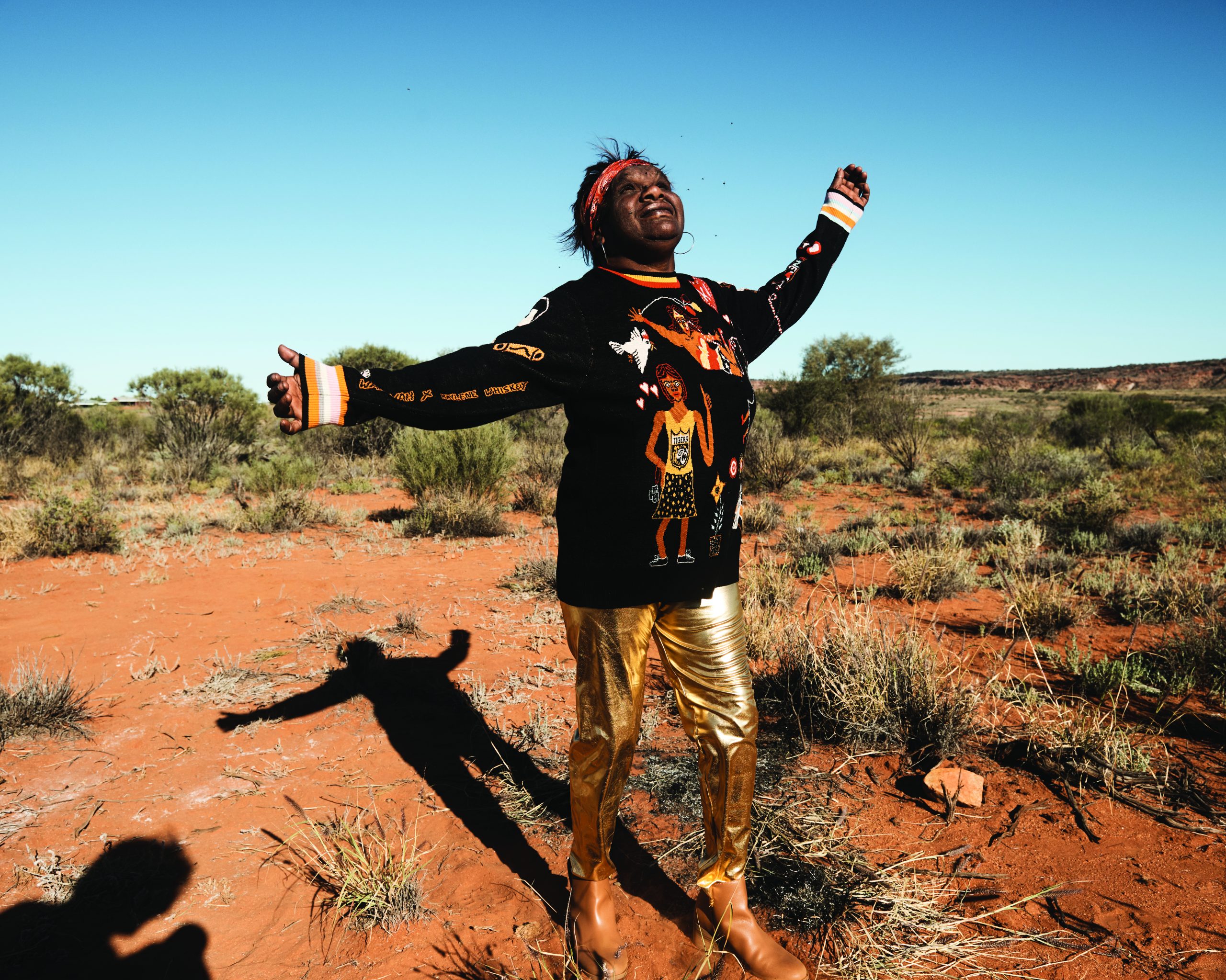
↑ WAH-WAH x Kaylene Whiskey. Photography Simon Eeles.

↑ WAH-WAH x Kaylene Whiskey. Photography Simon Eeles.
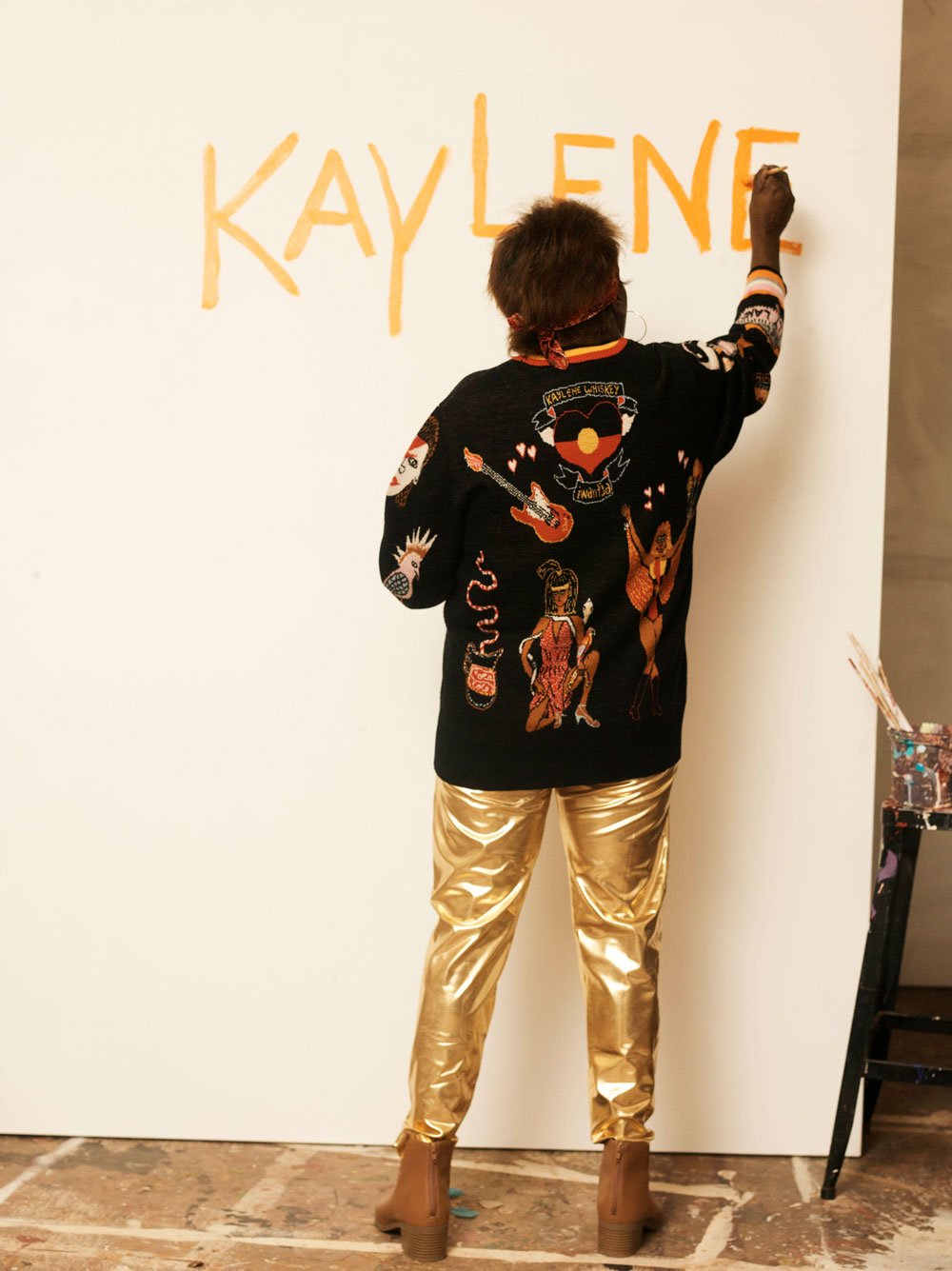
↑ WAH-WAH x Kaylene Whiskey. Photography Simon Eeles.
WAH-WAH x Kaylene Whiskey, Iwantja Arts
Sydney-based knitwear label WAH-WAH creates vibrant, tongue-in-cheek designs that are deeply inspired by pop culture. The label’s founder, Kaylene Milner, first encountered Kaylene Whiskey’s art in 2017 during a visit to the Museum and Art Gallery of the Northern Territory. The celebrated Yankunytjatjara artist is known for her irreverent, detailed paintings, which are distinct in their celebration of strong kungkas (women) and routinely depict pop culture icons such as Wonder Woman and Tina Turner participating in life in remote desert communities. “I didn’t know of Kaylene at the time, but seeing her artwork was so surreal because I connected with it on such a personal level,” says Milner. “Kaylene’s creating her own world where she’s hanging out with pop stars and I remember thinking ‘wow, someone has really tapped into my subconscious’.”
Beyond sharing a first name, the symbiosis between the two Kaylenes is something that Milner couldn’t help but explore, and she was thrilled when Whiskey agreed to collaborate. But this need to explore also created a desire to do right by Whiskey. “Kaylene was the first Indigenous artist that I ever worked with so I felt an immense responsibility to both her artwork and stories,” says Milner.
The WAH-WAH x Kaylene Whiskey collaboration culminated in an exquisitely vibrant jumper (and later a cardigan) showcasing a collage of Whiskey’s iconic artworks. It is a truly one-of-a-kind piece, and the reaction and endorsement of the collaboration was almost immediate. Celebrities such as Taika Waititi, Noel Fielding, and Tony Armstrong have all been snapped sporting the piece, and Milner has sold out every time she restocks. “I think the piece was embraced so much and so instantly because people love Kaylene Whiskey’s artwork,” says Milner. “I’m sure they appreciate my knitwear, but that’s not the aspect that our customers connect with.”
“The WAH-WAH jumper and cardigan collection has been so special to me. I love flashy clothes, and Kaylene (from WAH-WAH) really brought my art and my ideas to life on the warm woolly jumpers!” says Kaylene Whiskey. “Everywhere I go – Melbourne, Sydney, even New York – I see people wearing my design and it makes me feel happy and proud. People come up to me and say ‘Kaylene, I love your paintings, and I love your jumper!’”

↑ Elizabeth Wullunmingu x Helen Kaminski. Photography James Giles.
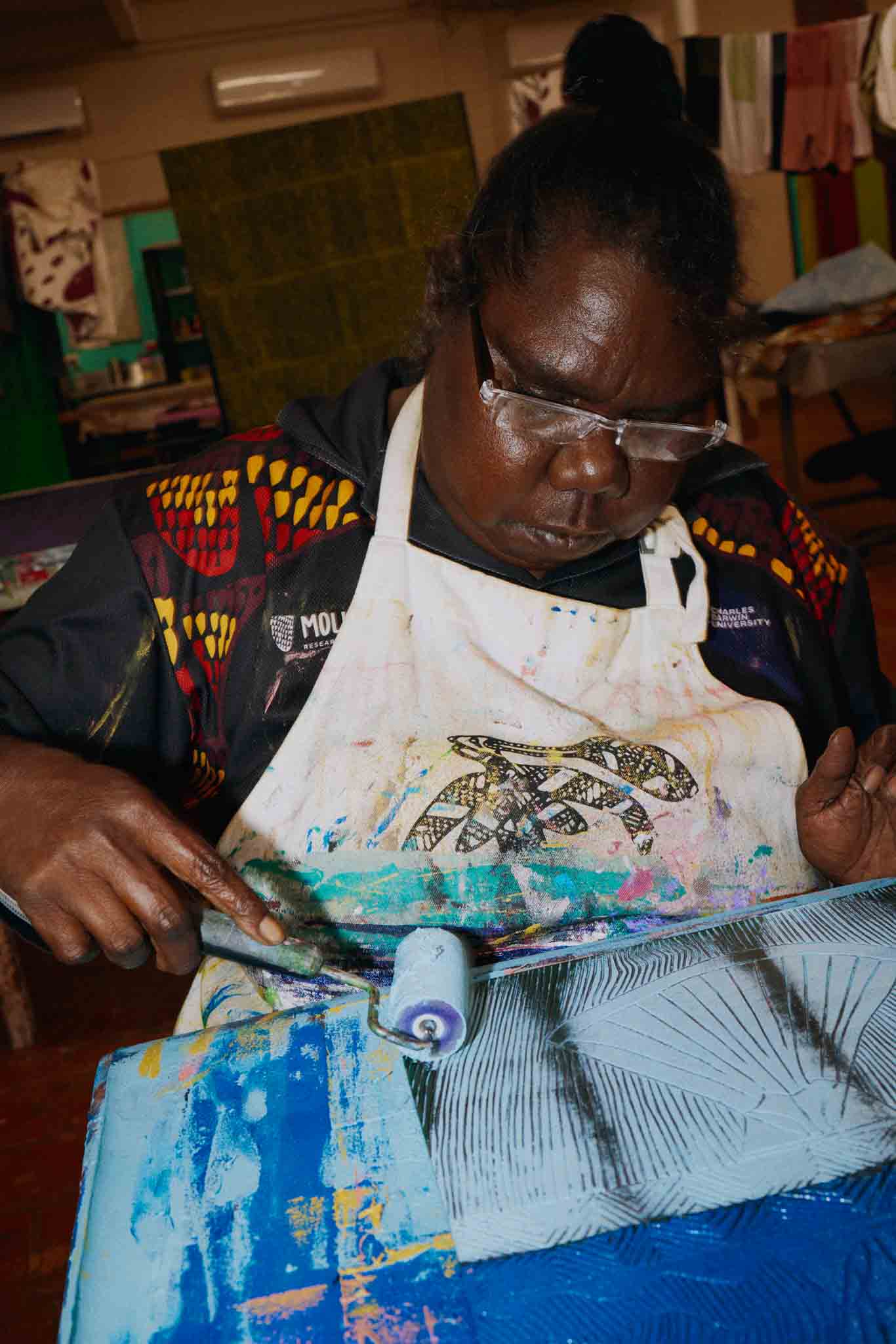
↑ Elizabeth Wullunmingu x Helen Kaminski. Photography James Giles.
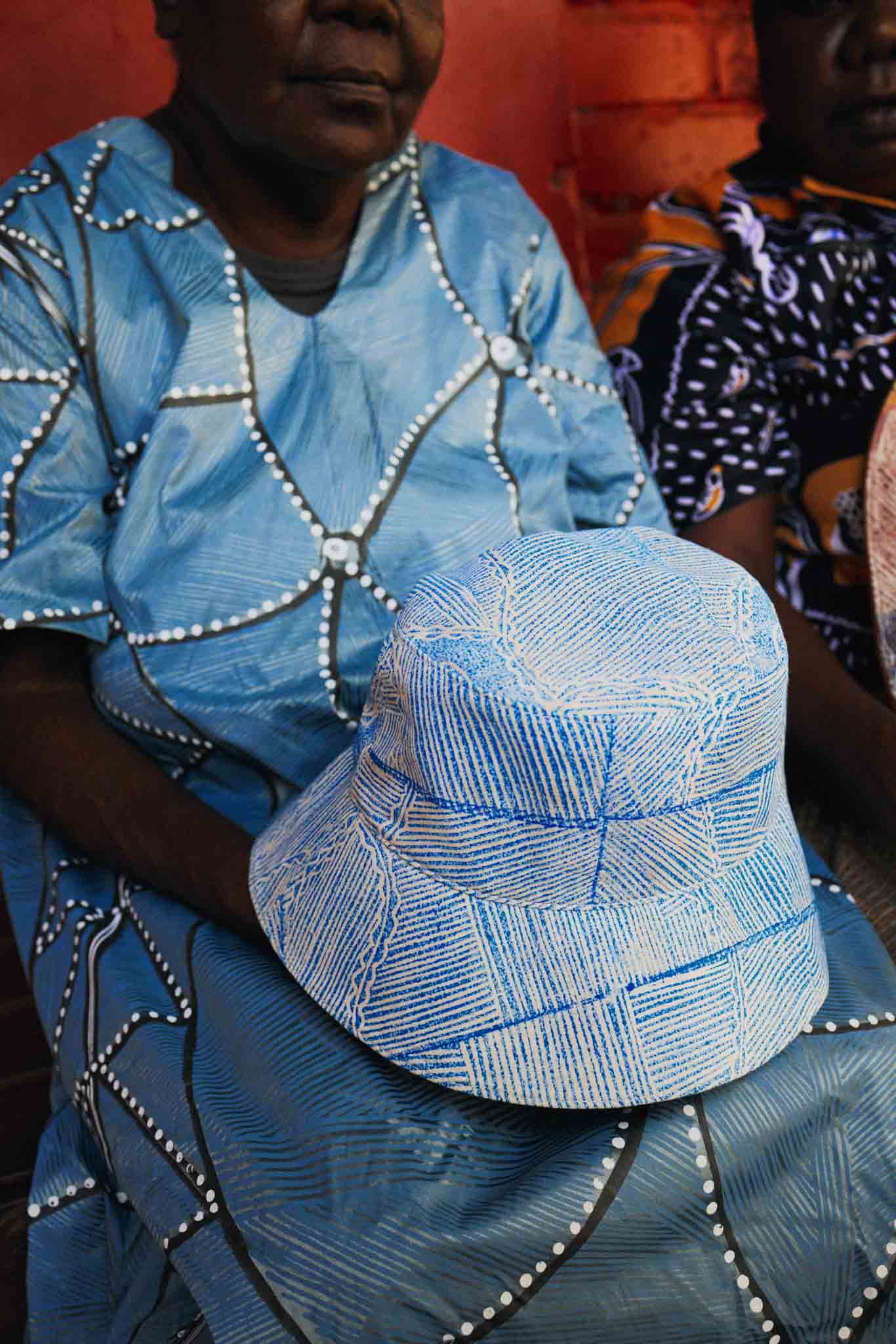
↑ Janet Marawarr x Helen Kaminski. Photography James Giles.
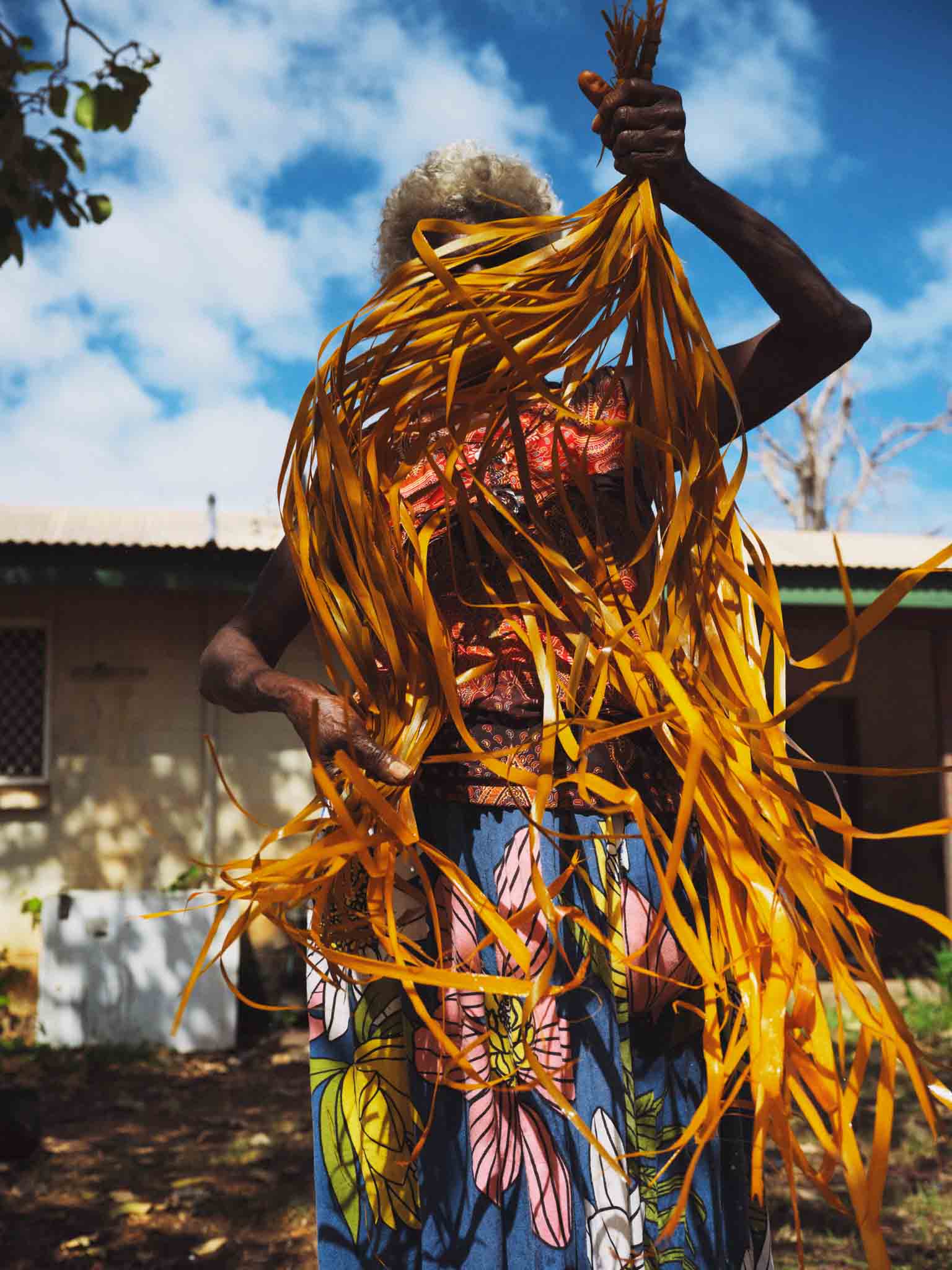
↑ Helen Kaminski artist workshop. Photography James Giles.
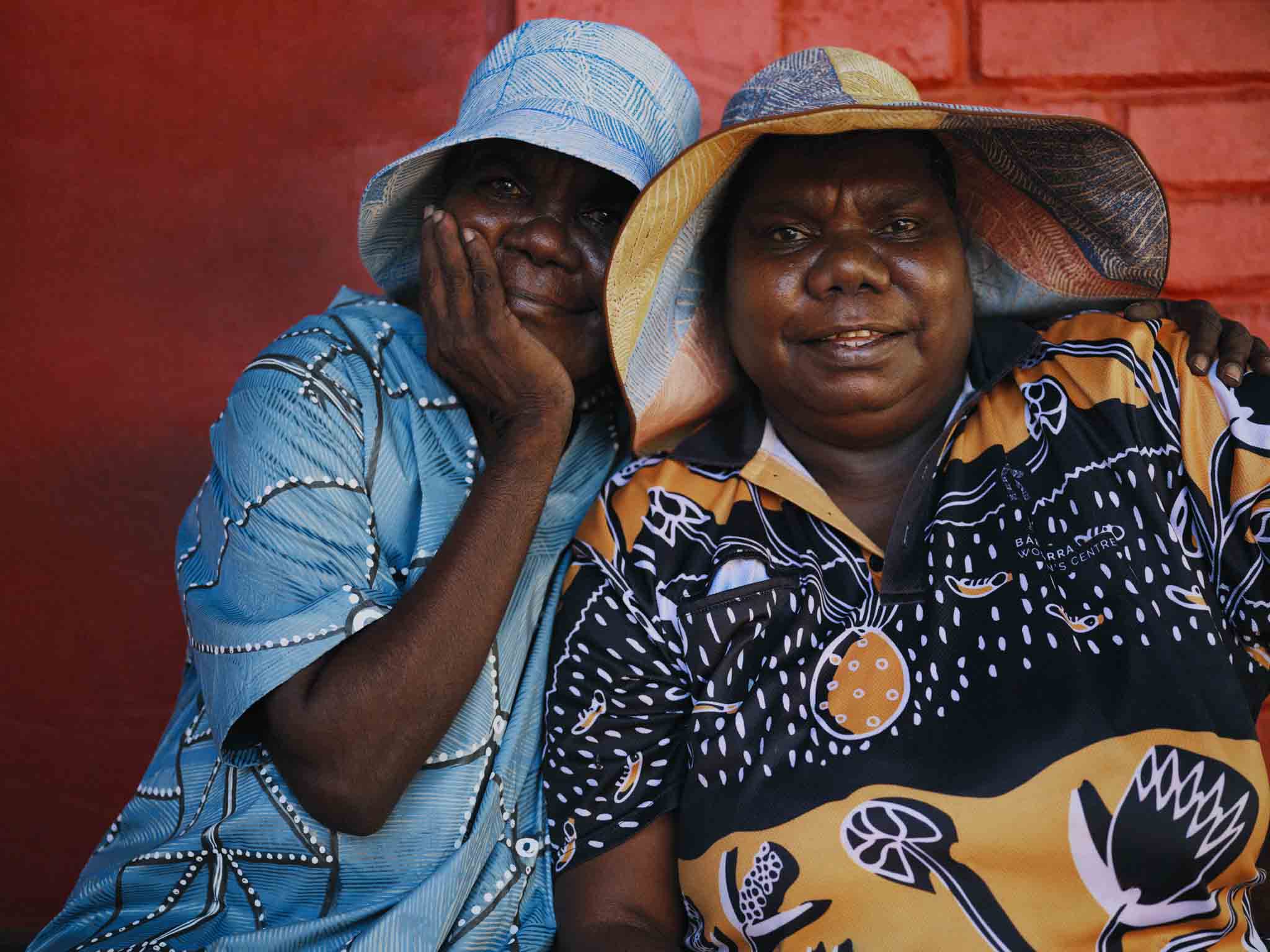
↑ Janet Marawarr and Elizabeth Wullunmingu. Photographer James Giles.
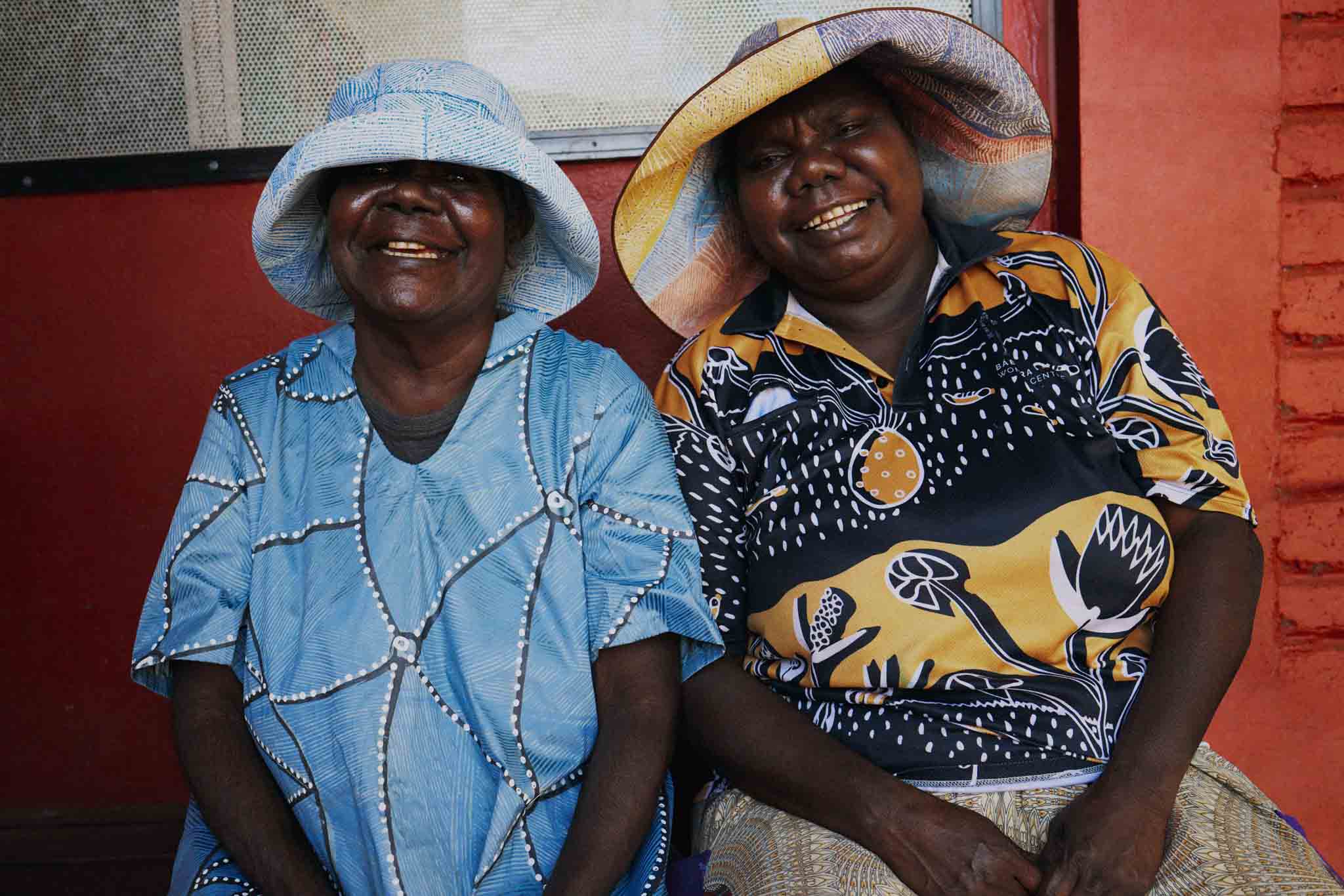
↑ Janet Marawarr and Elizabeth Wullunmingu. Photographer James Giles.
Helen Kamiski x Babbarra Women’s Centre
Helen Kaminksi is one of Australia’s most established accessories brands, known for its timeless and considered approach to design. For its inaugural Indigenous collaboration, the brand teamed up with two respected artists from the Bábbarra Women’s Centre, Janet Kalidjan Marawarr and Elizabeth Kodjdjan Wullunmingu. The artists created intricate textile designs rooted in ancestral narratives, which appear on a limited-edition collection of hats and visors that debuted as part of Helen Kaminski’s Spring/Summer 2024 collection.
Established on the north coast of Arnhem Land in 1983, Bábbarra is one the oldest continuously operating Indigenous textile workshops in Australia, and its operations have helped the women achieve financial independence for themselves and their community. The space is a hub of intergenerational practice and creativity, a collection of textiles that hold the lives and stories of generations of Maningrida women.
For the collaboration, both Marawarr and Wullunmingu created lino prints to be hand printed onto textiles, a creative process that requires extensive skill and time. “We were really upfront with Helen Kaminski that this was going to be a really long and slow process, but they were completely on board,” says Ziian Carey, Bábbarra’s manager. Helen Kaminski handed over total control to the artists of Babbarra, and the project was two years in the making, with the women hand painting more than 100 meters of textiles. The lack of pressure from the brand also allowed the women the time to tend to cultural obligations, which for Marawarr included a working trip to India.
But time is more than a physical phenomena. It also means making space to understand the meaning behind the artwork. “Really taking the time to honour that we are documenting important ancestral stories on textiles was a really important part of this collaboration,” says Carey. “Helen Kaminski took the time to really understand these stories. They visited us, they did photoshoots on Country, and they let the artists work at their own pace. They were great collaborators and the final product speaks for itself,” says Ziian.
But this collaboration is more than a collection of striking accessories. It speaks directly to the lives of the women behind these designs. “These collaborations are a way of archiving these stories for years to come, especially after these women pass,” says Carey. “An important factor for these women is that their stories are being recorded and they’re expressing their own agency in choosing textiles as a medium to hold these stories.”
The passage of time is, generally speaking, outside of our control. But making time to build relationships with First Nations artists isn’t, and the distinctiveness of First Nations art requires it. “First Nations collaborations are unique because of what Indigenous art and cultural expression means,” says Parkin. “It’s not just artwork. There is real meaning, story, and life behind it.”

This article originally appeared in the Art Collector 2024 Darwin Aboriginal Art Fair Special Edition, click here to read more.
Cover Art by Betty Mula, 33-24 PunuTjuta, Synthetic polymer on linen, 152 x 122 cm. Courtesy of the Artist and Mimili Maku Arts.
Contributor Nick Harvey-Doyle is a descendant of the Anewan people from the Northern Tablelands of NSW. He has qualifications in arts, law, and journalism, and is currently studying a Masters of Media, Culture, and Communications at New York University with the support of a Fulbright Scholarship.